
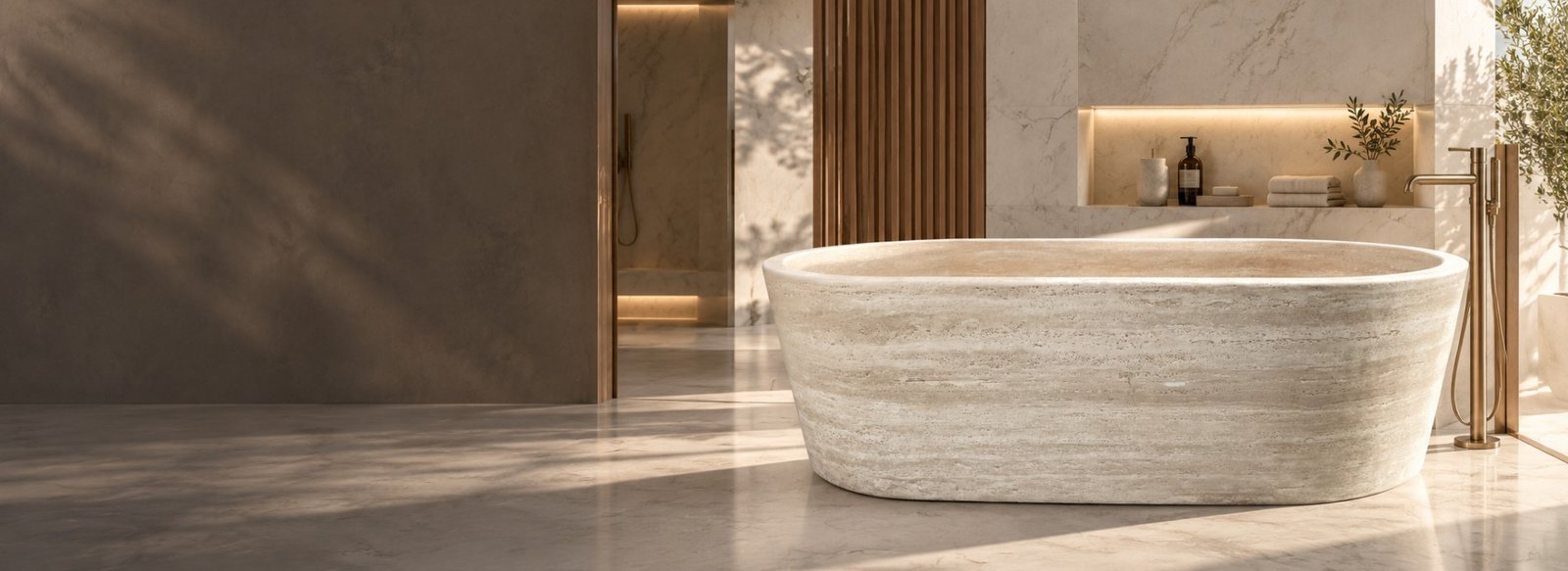
Reliable Travertine Bathtub Manufacturers
GLMStone has more than 20 years of natural stone fabrication experience, with custom stone bathroom products supplied to 15 countries and regions. Our production line combines infrared inspection equipment, hand finishing and repeated sealing work. Annual output is more than 1,000 sets, supporting single custom baths as well as repeat orders for hotels, villas and other project supply.
Your bathtub starts with the approved drawing. We check the main dimensions and drain position, then select the travertine block for color, fissures and usable stone condition. The tub is carved from one solid block by 5-axis CNC, not assembled from separate stone panels.
After rough machining, newly exposed pores or weak areas are checked again. The tub then goes through hand finishing and sealing. Before shipment, we measure the finished piece, add custom-fit foam around the tub shape, and choose a wooden crate or steel frame according to its size and weight.
Send your drawing, required size, We can check the stone condition, machining details and packing requirements before quotation.
Travertine Bathtub Collection for Your Project Orders
Travertine tubs can use different block colors, shapes and finishes.
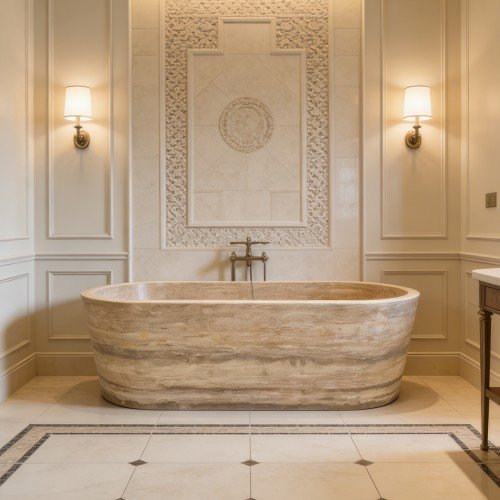
Your room layout normally decides the finished footprint. Drain position and access around the tub are checked before the block is released for machining.
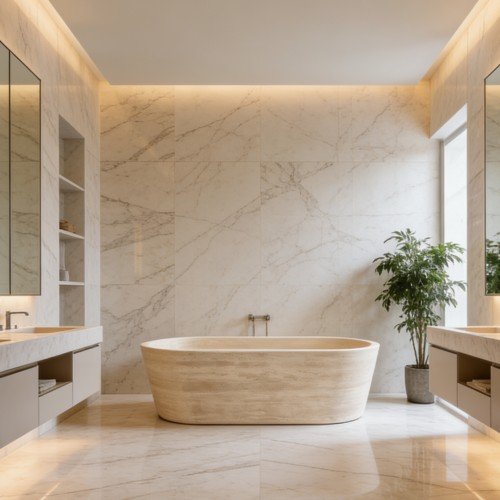
One natural travertine block is used for the whole tub, rather than separate stone panels. After the usable block area is confirmed, the inner bowl and outer shape are formed by 5-axis CNC.
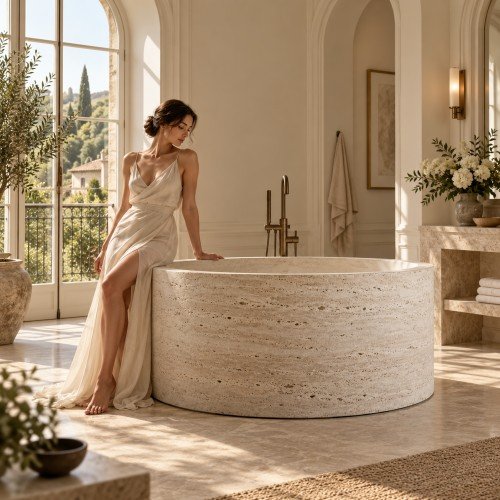
Your required diameter comes first on a round tub. Wall thickness and drain position are then set from the drawing, while enough stone is kept around the curved bowl.
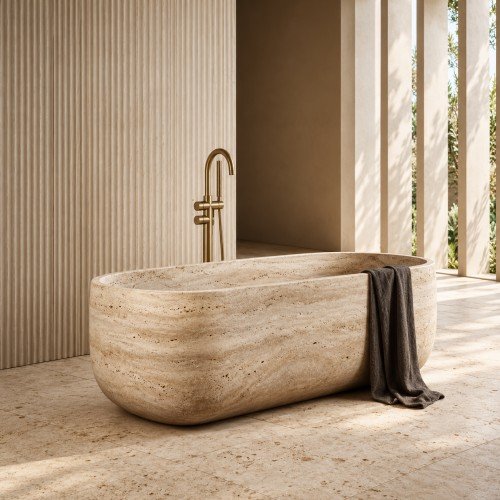
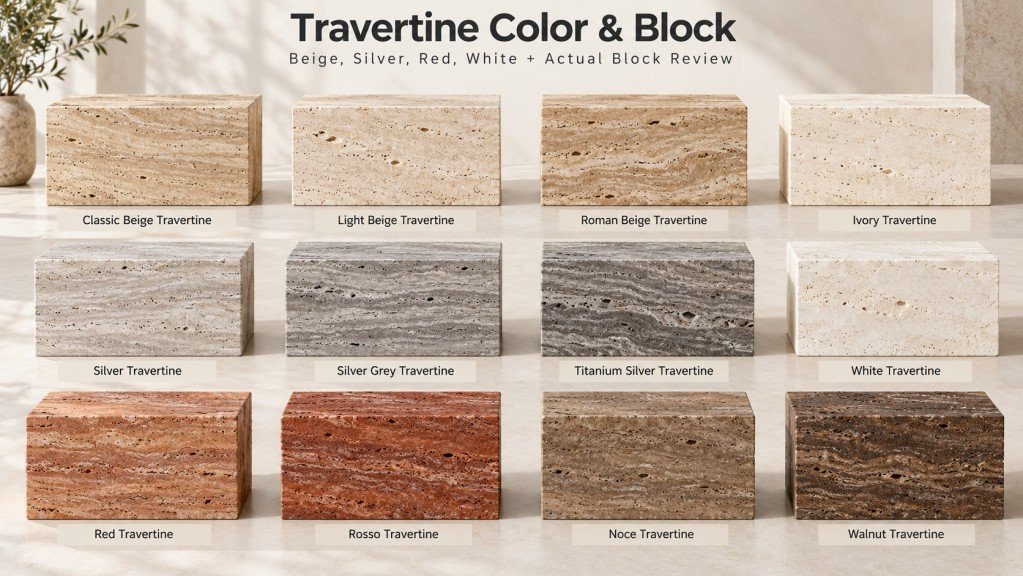
If your project needs a warmer stone tone, beige travertine is one of the more common choices for villas and hospitality bathrooms. You can compare the actual block color and pore pattern before the stone is selected.
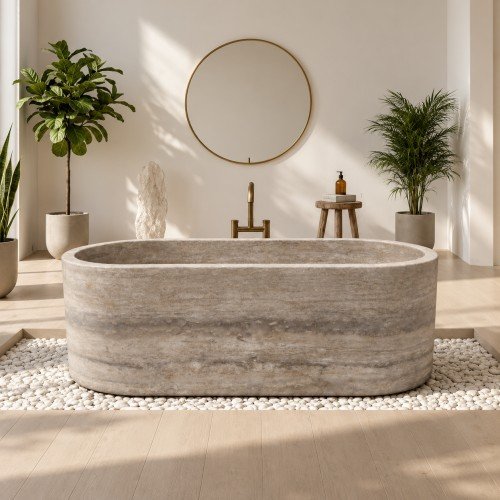
The grey linear bands are usually the main feature of silver travertine. Their direction can be arranged around the visible sides of your bathtub when the block orientation is decided.
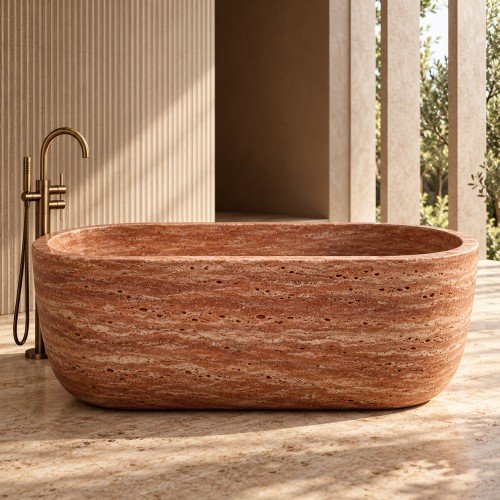
Actual block photos are useful here because red travertine can change a lot in tone and vein movement. You can also see the larger natural cavities before production instead of judging only from a small sample.
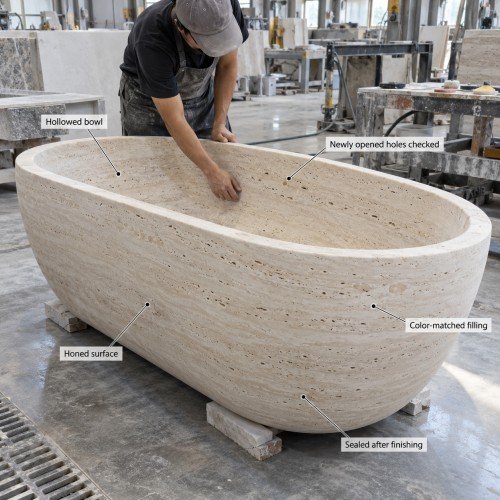
Pores and filler color show more clearly on lighter travertine. Once the bowl has been hollowed, newly opened holes are checked again before filling, honing and sealing.
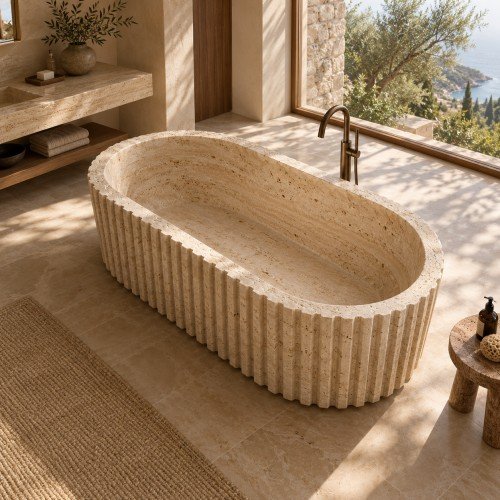
Once the bathtub gets larger, weight and site access become more important. Your drawing gives us the finished size and wall thickness, which can also be used for an early shipping-weight estimate.
Why You Choose GLMStone Solid Travertine Bath
Travertine is not a uniform molded material. Natural pores, cutting direction, block color and surface finish all change the final bathtub appearance, so these details are better confirmed from the actual stone before carving.

Honed travertine gives the bath a lower-gloss surface than polished stone. It keeps the natural color and pore character visible without strong reflections, which works especially well in villas, resorts and spa-style bathrooms.

The inner bowl and outer profile are hollowed from one travertine block rather than assembled from separate panels. This gives the bathtub a more continuous stone form without visible panel joints around the main body.

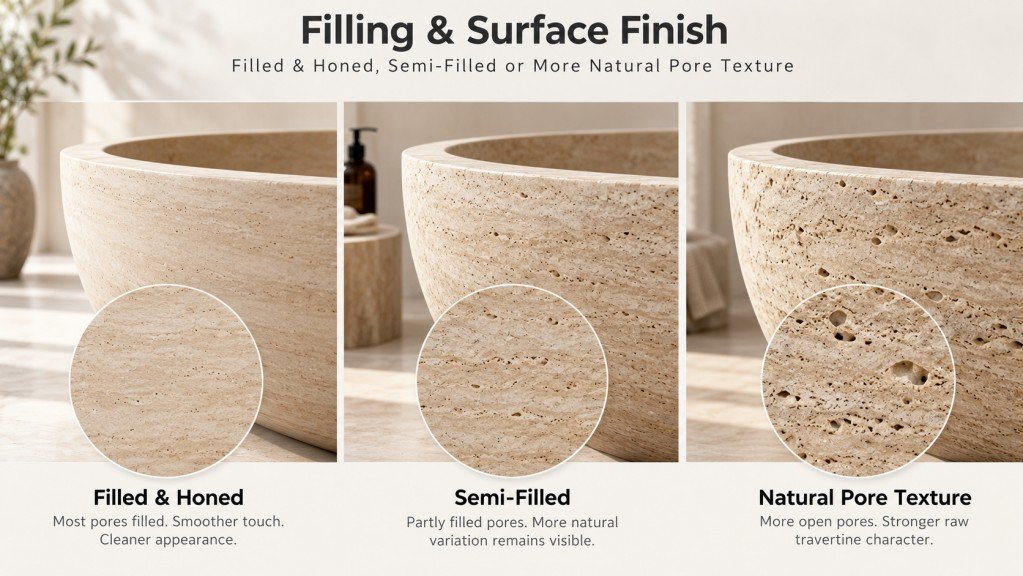
Travertine keeps its natural pore structure even after shaping. Your bath can use a more fully filled and honed surface for easier cleaning, or retain some smaller pores where a more natural stone texture is preferred.

The same travertine block can look very different depending on the cutting direction. Vein-cut stone shows more linear movement, while cross-cut surfaces give a softer, cloud-like pattern across the tub body.
Second Filling After CNC to Reduce Open Pores and Loose Filler
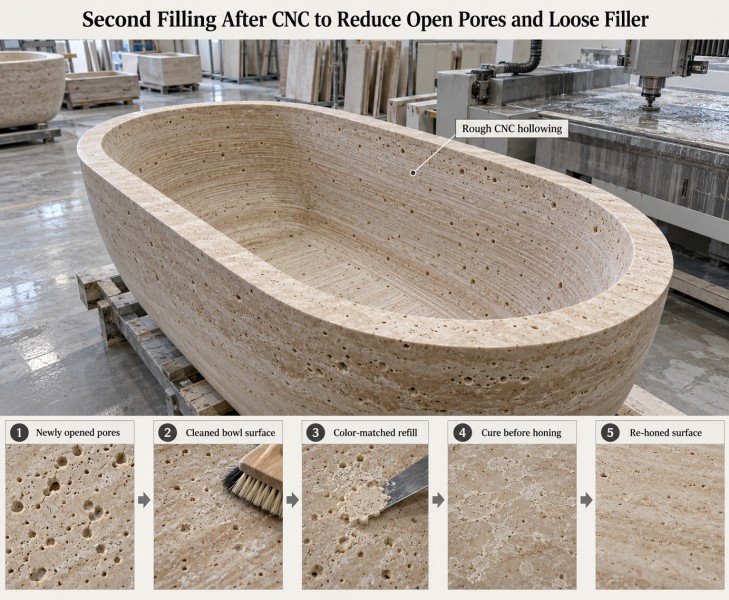
New pores can appear after the inner bowl is hollowed, even when the travertine block was filled before machining. We clean the bowl again after rough CNC work and refill the newly opened holes where needed.The repaired areas are left to cure, then honed back with the surrounding surface. This is especially useful around the bowl where small pinholes or old filler may become visible after carving.
CNC Drain Seat for Better Waste-Fitting Contact
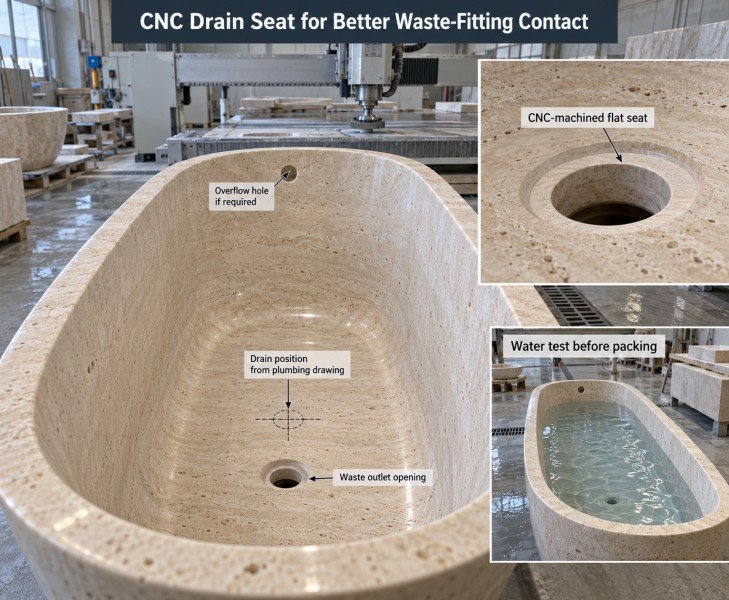
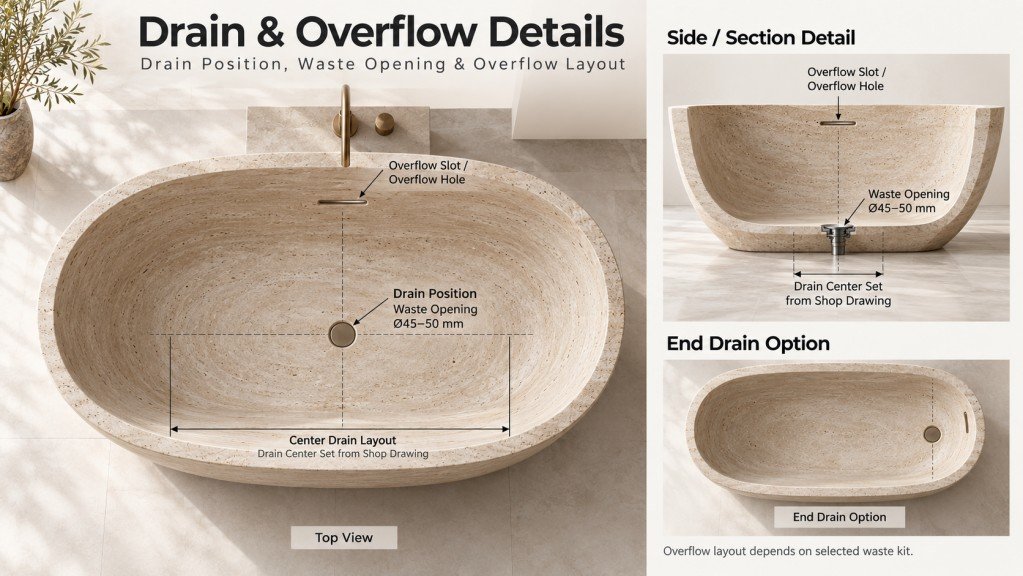
Your drain position and fitting size are checked from the plumbing drawing first. The contact area around the waste outlet is then machined by CNC, giving the flange a flatter surface to sit against.
Overflow holes can be prepared at the same stage if your selected system needs them. After the surface work is finished, the drain area can be included in the water test before packing.
From Travertine Block to Finished Bath in One Production Flow
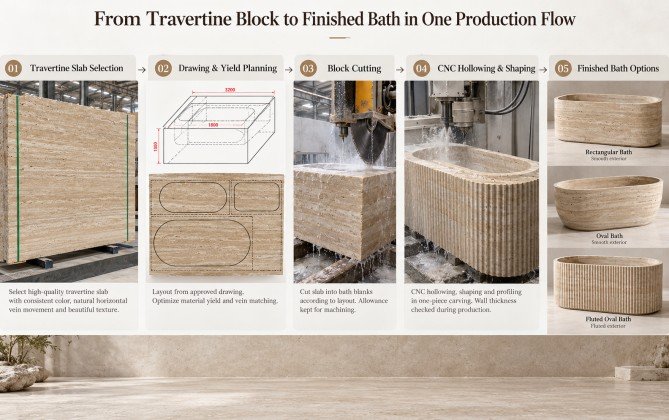
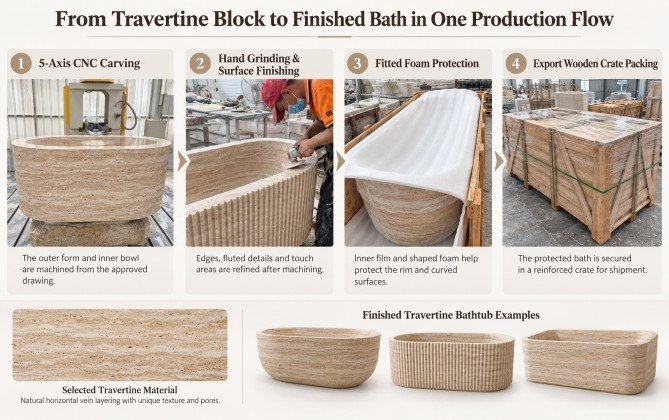
Your bathtub moves through block checking, drawing review, CNC hollowing, hand finishing and final packing under one production schedule. Key details are checked again when the stone changes from one stage to the next, rather than leaving all inspection until the bath is finished. This is especially important with travertine, because new pores, visible fissures and surface differences can appear after the block is opened and shaped. Each finished bath is then matched to its inspection record and packing mark before shipment.
Travertine Bathtub Support for Different Project Buyers
Factors such as stone selection, piping details, on-site access, and batch control will vary from order to order. We will arrange production records and inspection points based on your bathtub specifications, installation, and delivery method.
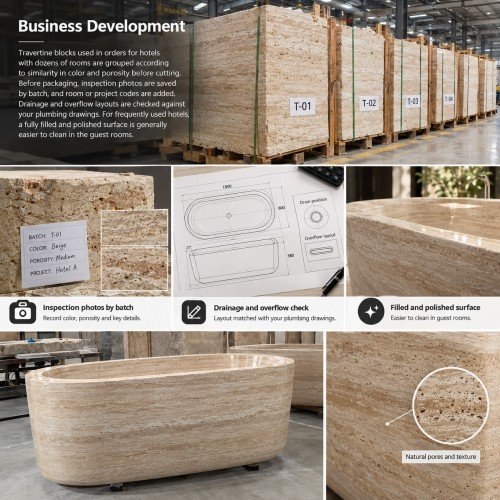
Travertine blocks used in orders for hotels with dozens of rooms are grouped according to similarity in color and porosity before cutting. Before packaging, inspection photos are saved by batch, and room or project codes are added. Drainage and overflow layouts are checked against your plumbing drawings. For frequently used hotels, a fully filled and polished surface is generally easier to clean in the guest rooms.
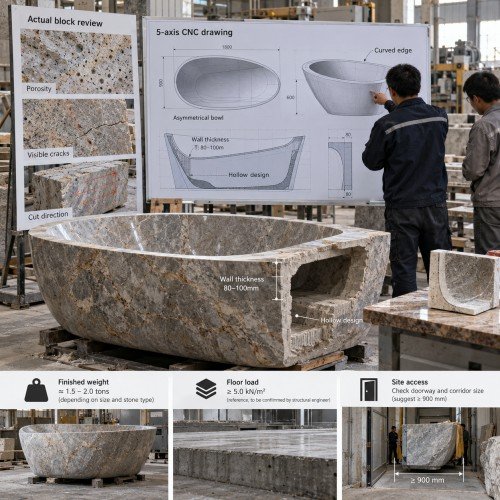
You can first view photos of the actual wood blocks, including porosity, visible cracks, and cut direction. Features such as curved edges, asymmetrical bowl shapes, or thicker profiles will then be added to the production drawings for five-axis CNC machining. Considering the weight of the finished bathtub, the wall thickness and hollow design need to be reconsidered, especially in situations with floor loads or limited on-site access.
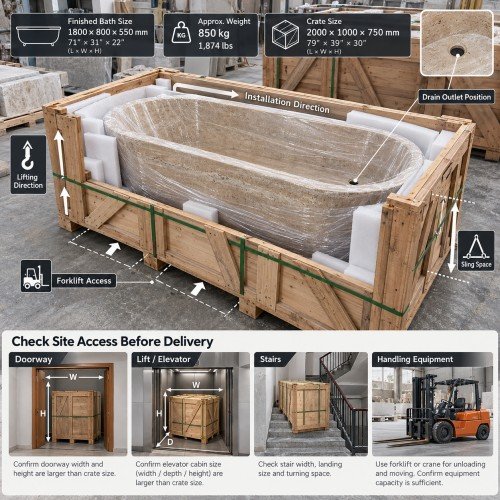
Your site team will receive the dimensions, approximate weight, packing box dimensions, and lifting direction of the finished bathtub before delivery. This allows for advance inspection of doorways, elevators, stairs, and handling equipment. The packaging base can accommodate forklift access or lifting space. Drain outlet locations follow approved piping drawings, and the installation direction can also be marked on the packing box.
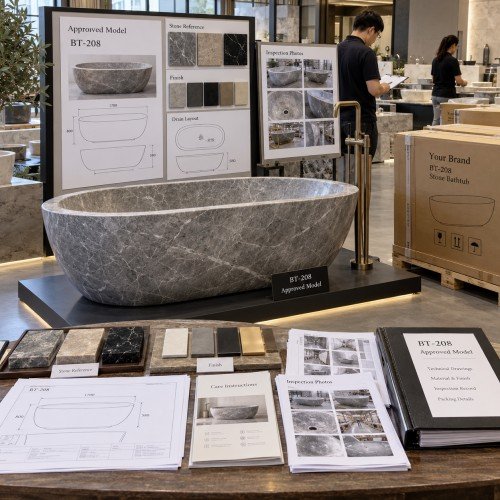
Once a model is approved, its drawings, stone references, finishes, and drainage layouts can be retained in the SKU for use in subsequent orders. Small-batch trials or showroom displays can utilize existing inventory without waiting for large-volume arrivals. Inspection photos, care instructions, and private-label packaging can also be customized with your own model number.
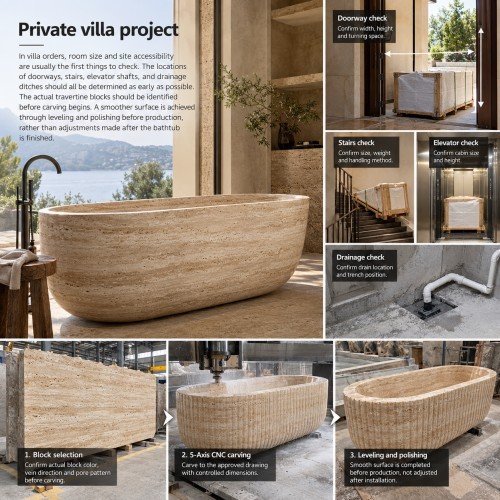
In villa orders, room size and site accessibility are usually the first things to check. The locations of doorways, stairs, elevator shafts, and drainage ditches should all be determined as early as possible. The actual travertine blocks should be identified before carving begins. A smoother surface is achieved through leveling and polishing before production, rather than adjustments made after the bathtub is finished.
Confirm the Main Details for Your Travertine Bathtub
Size, stone condition, plumbing and site access should be checked before the block goes into carving. You can use the options below to confirm the main bath details with your designer, plumber or project team.
- Bathtub Size & Bathing Space
- Travertine Color & Block
- Drain & Overflow Details
- Filling & Surface Finish
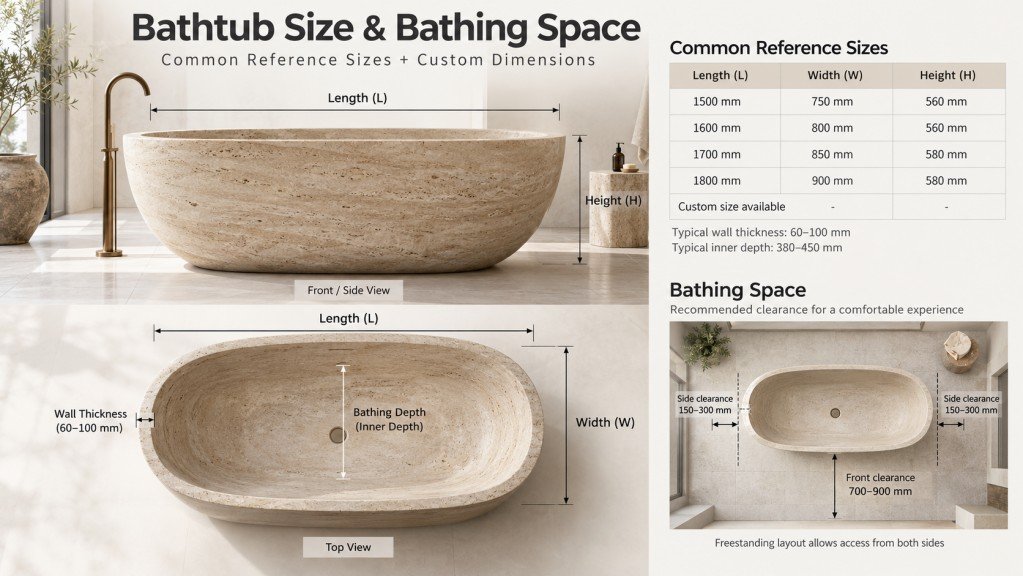
A solid travertine bathtub typically weighs between 1,100 and 2,000 pounds (500 to 900 kilograms). The final weight will vary considerably depending on the size of the bathtub and the amount of stone removed during the carving process. We will provide a final weight estimate based on your confirmed drawings.
No. Natural travertine bathtubs are carved from real stone. You can see the stone’s pores, color variations, and mineral textures, all of which vary from stone to stone. Stone resin bathtubs, on the other hand, are made by mixing mineral fillers with resin or other composite materials, so they are different products.
Yes. Travertine is porous, so we typically apply a penetrating sealant after filling and polishing. This helps slow down the absorption of moisture and stains, but the surface still requires routine maintenance. The intervals between resealing are not fixed; frequently used bathtubs may require more frequent checks.
Travertine stone is only one part of the price. The size of the bathtub and the amount of stone available are the main considerations. Deeper bathtubs, thicker bathtub walls, or asymmetrical shapes require more stone and CNC machining time. The costs of filling, surface treatment, and export packaging are considered after the design is finalized.
Minor damage and localized filler loss can usually be repaired without replacing the entire bathtub. We typically use a stone-compatible filler and then polish the repaired area to ensure a better fit with the surrounding polished surface. For larger damage, such as near drains, the base, or natural cracks, an assessment should be conducted first, as simple surface repairs will not suffice.
Compare Natural Stone Bathtubs for Different Project Needs
-
 Solid Marble Bathtub
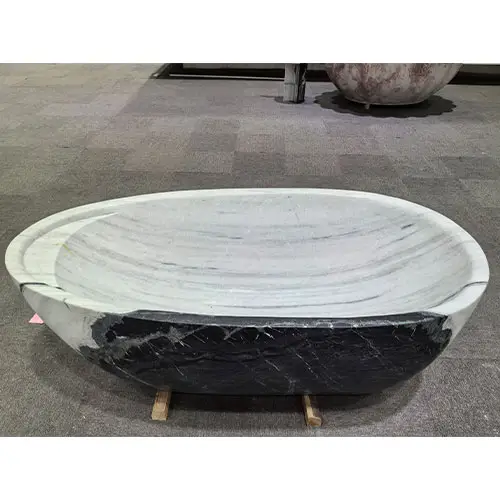
Carved from one natural marble block, with the inner bowl and outer profile formed as a single piece. Block size, visible fissures and finished weight are checked before machining.
-
 Carved Marble Bathtub
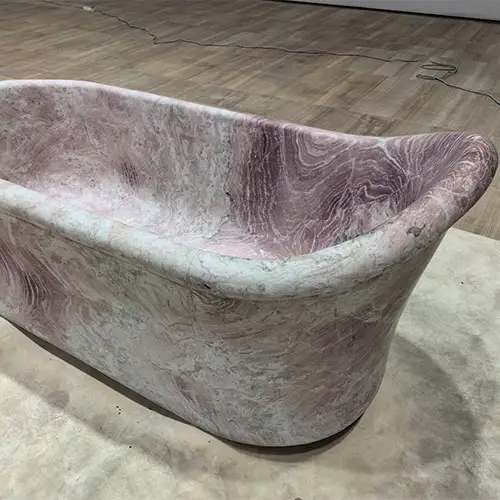
Curved rims, sculptural sides and non-standard bowl shapes can be developed from your drawing. 5-axis CNC handles the main form, followed by hand finishing around detailed areas.
-
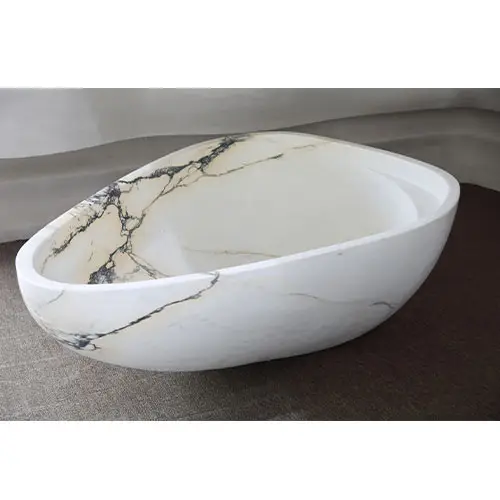 White Marble Bathtub
White marble varies noticeably in vein density and background tone. You can review the actual block first, especially when several baths need to stay within a closer visual range.
-
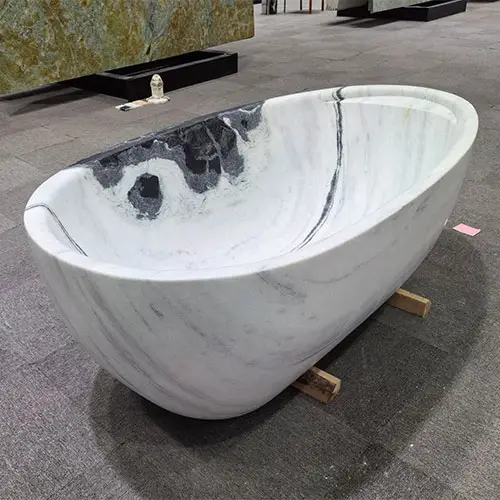
Designed for villas, hotels and larger bathroom layouts where the tub is visible from several sides. Finished size, drain position and site access can be confirmed before production.
-
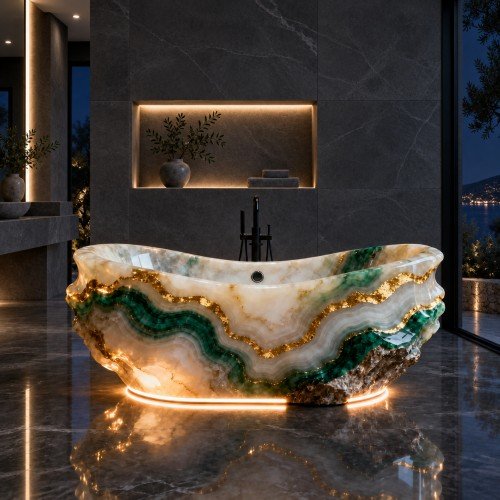
Carved from one selected onyx block rather than assembled from separate panels. Block size, visible fissures and usable translucent areas are reviewed before CNC hollowing starts.
-
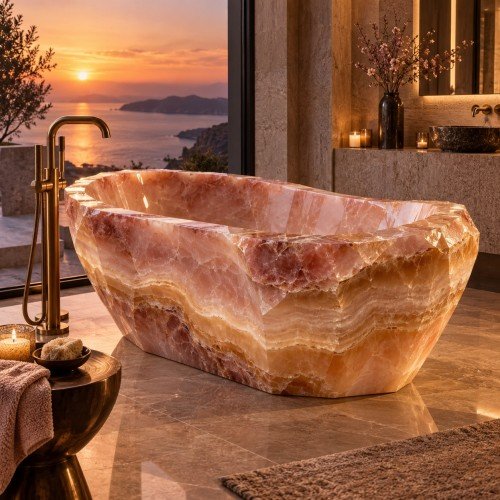 Pink Onyx Bathtub
Pink and amber bands can vary considerably from one block to another. You can review the actual stone first, then decide which color movement should remain on the main visible faces.
-
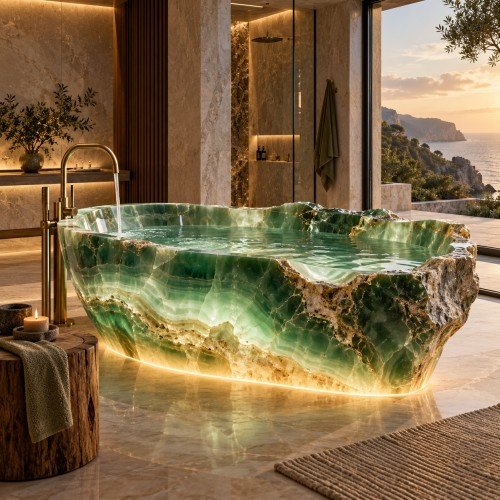 Green Onyx Bathtub
Green onyx often has stronger bands and clearer translucent areas. If your project includes backlighting, the stone orientation and lighting position should be considered before the bath goes into production.
-
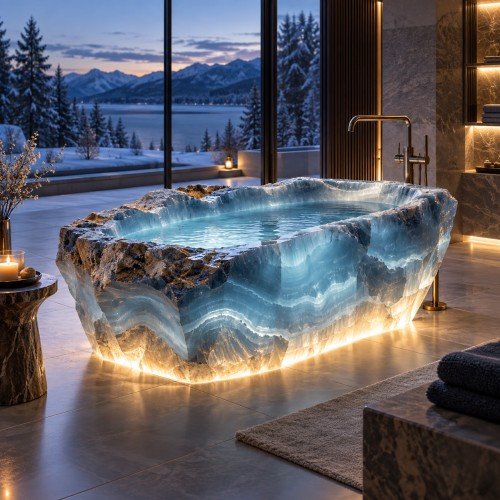 Blue Onyx Bathtub
Blue onyx availability and usable block size can be more limited, so the actual material is better confirmed early. For villas, showrooms or one-off projects, we can review the block condition and visible crystal movement before shaping.